· 3 min read
How to Spot and Prevent Useless Meetings
Create your own agenda for once
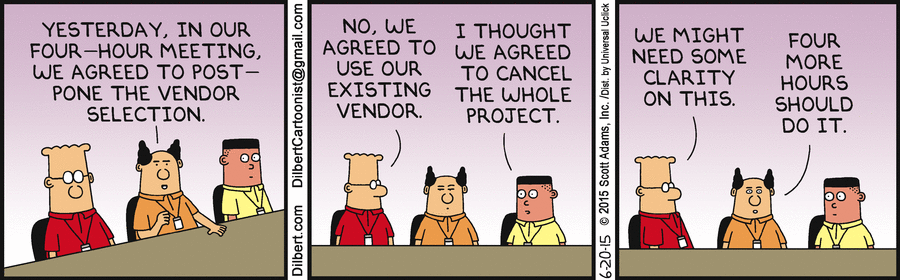
We all have experienced this. A painful and draining meeting that at the end didn’t solve the problem and leaves you with a feeling of wasted time.
The argument is often to favor collaboration but, what does this mean? Is having meetings the only way to collaborate? As a result, you end up having more meetings than you should. Meetings are just one way to collaborate.
Most of the advice I found on this topic was on how to run effective meetings. However, I couldn’t find much on how to spot useless meetings and prevent them from happening in the first place.
Don’t get me wrong, meetings (when done right) can be very powerful and productive. But not all of them are equal. As Andy Grove mentions in High Output Management, there are at least two types of meetings — the process-oriented meetings and the mission-oriented meetings. It’s about the second type of meeting that I’m talking about.
The real sign of malorganization is when people spend more than 25 percent of their time in ad hoc mission-oriented. — Andy Groove
As a Product Manager, I try to find a healthy balance. If I’m not careful, my agenda ends up being everyone’s else agenda.
When to say YES
Alright, and when is a meeting justifiable?
- For urgent/important problem-solving: When things go south, jumping to a quick call and sync up on how to proceed might be the best thing you can do. However, sometimes there’s no real need to do it “real-time”.
- For relationship building purposes: When you join a new team, these meetings are key to build the trust you need to succeed in your role. Moreover, they serve as a space to talk about sensitive topics, and even to get personal. Don’t overlook these, especially when working with remote team members.
- For brainstorming activities: When you need to foster creative thinking and generate ideas, collaborative sessions like design studios, empathy maps, and brainstorming sessions are great. Just don’t forget to have a moderator to make sure the session stays focused.
- For retrospectives and feedback: When you need to reflect and learn from past mistakes as a team. They can be hard to run because trust should be enough so people would speak up. A moderator is also very much needed.